UI / UX Design
In-app assets library
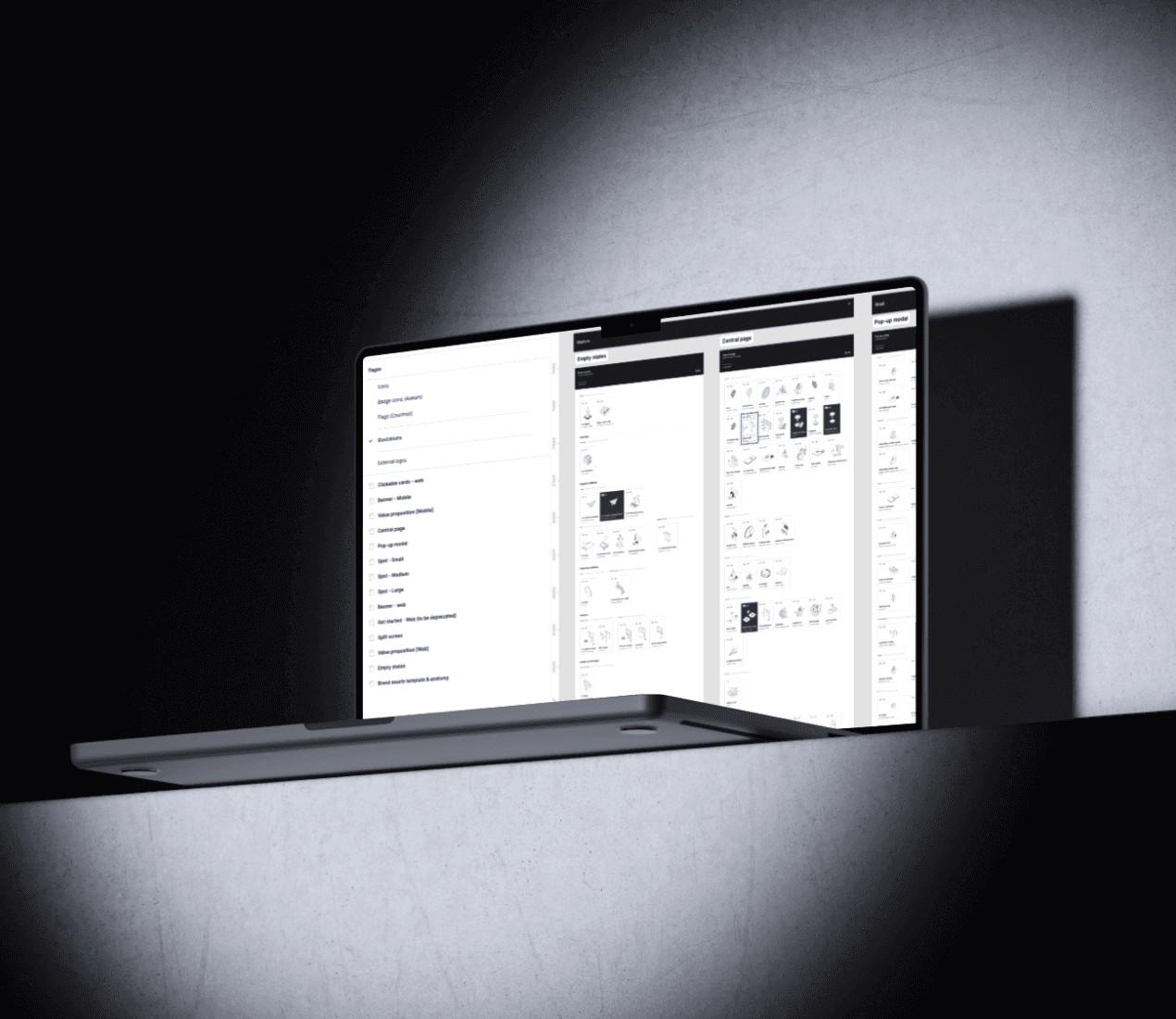
Curated library with ready-to-swap components of all in-app assets we used across organisation and improved collaboration between Product and Brand Design teams
Year :
2025
Industry :
FinTech
Client :
Qonto
Project Duration :
4 weeks
Problem :
At Qonto’s in-house design studio, we created custom illustrations weekly - but delivery, storage, and maintenance needed work. I spotted these gaps during my Empty States project, pulling scattered assets from across the app.
I teamed up with another product designer and the brand team to overhaul our collaboration workflow.
We discovered a few issues:
Assets in existing library were nowhere near to match the size I needed them in as those were ‘raw’ materials
Illustrations in existing spec files had different sizes, even though they were supposed to be standardised
Some illustrations were saved in local team’s libraries, but formatted in a way that it wasn’t scalable
Our intake forms were no longer sufficient, requests were scattered and inconsistent, slowing down delivery times
Solution :
This project introduces a 3D abstract artwork centered on a coral-colored spiral form with smooth, flowing curves. Set against a soft pink gradient background, the design leverages organic geometry to create a sense of movement and depth.
The use of coral tones brings warmth and vibrancy, while the gentle gradient enhances the overall softness and modern appeal. This composition aims to capture attention while remaining elegant and balanced.
Process :
Gather an impactful (and impacted) team
We put together an operational team of 2 brand designers that were mostly working on in-app assets and 2 product designers that experienced similar issues the most
Worked with two main stakeholders, leads of both teams
Analyse the current situation
Poor discoverability of existing assets
Inconsistent asset sizes
Inconsistent stroke formatting due to manual resizing
Lack of standard on where and how to save illustrations
Unclear ownership in terms of who creates components
Using placeholders for asset swapping was not possible
Interview other Product Designers
We interviewed 5 other Product Designers from our team to understand how they deal with the process
All of them confirmed this is a problematic area for them, often requiring rework of assets and/or assistance from brand designers
All described the process as manual and time-consuming
That only meant we were on the right path.
Results :
Process definition
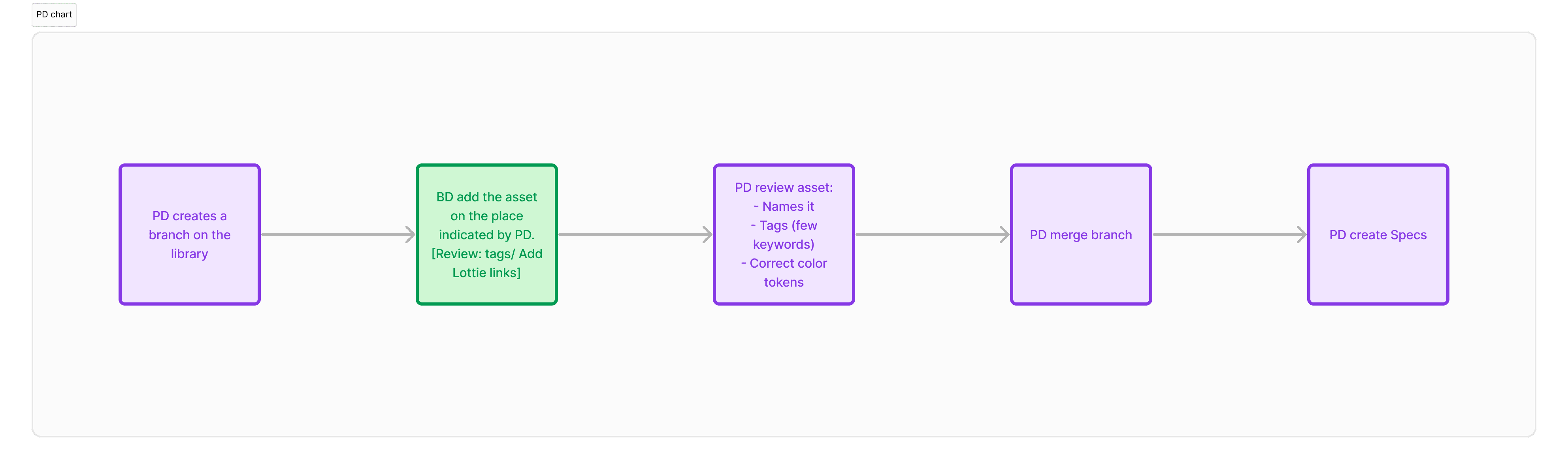
Mapped out the process based on requirements of both PD and BD
Introduced clear roles and responsibilities
Full inventory of assets
Gathered all assets existing in-app
Sliced them into types and categories
Rework of assets that were not fitting into any of categories to get rid of the ‘special cases’
(re)standardisation
Refined the asset sizes and types
Reworked the documentation of each type
Merged asset types in order to reduce the amount of types goal
Result :
One library to rule them all
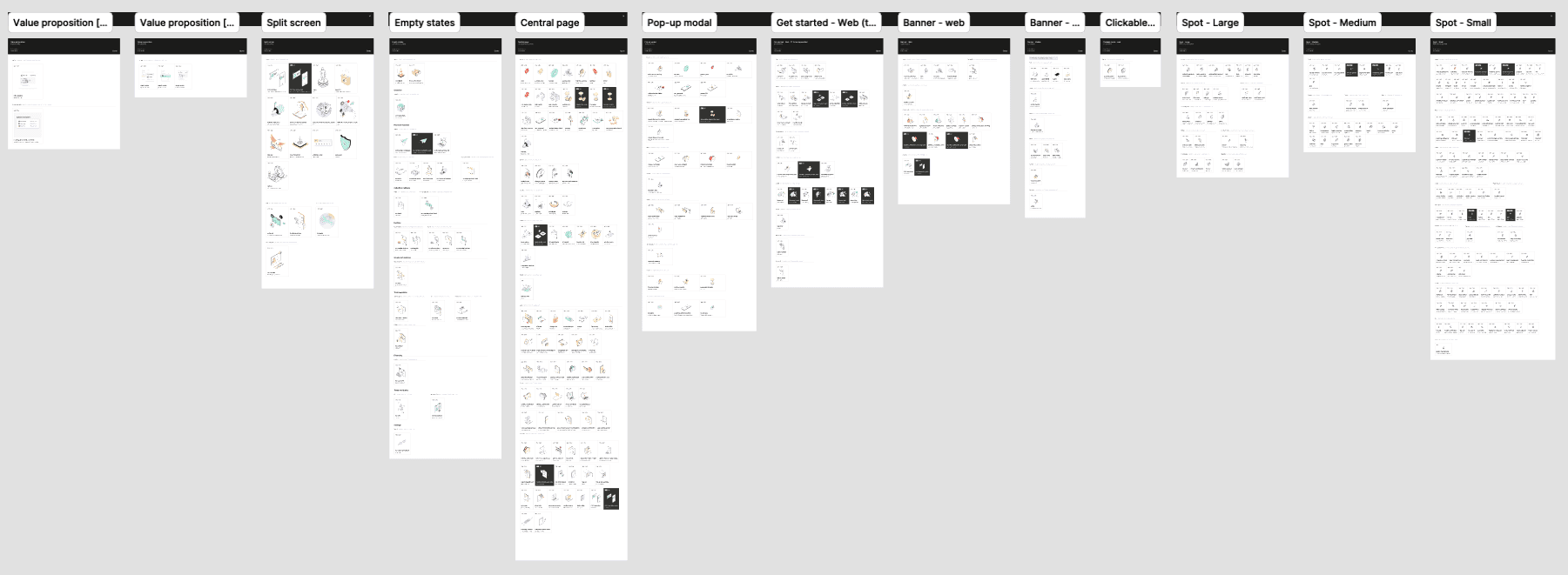
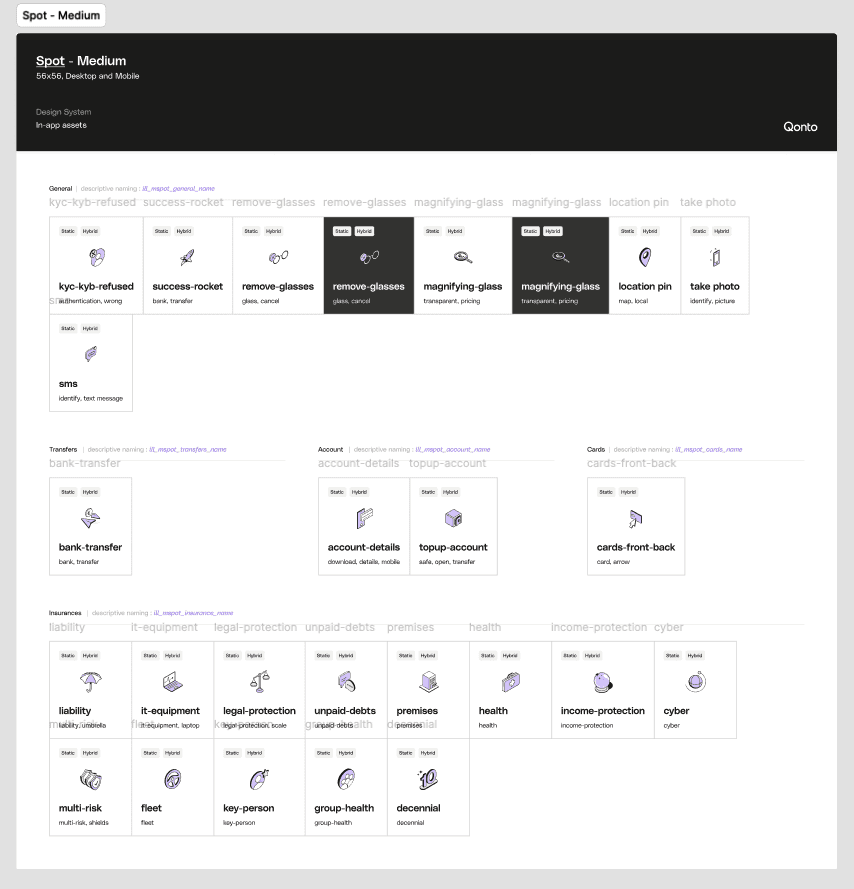
All brand assets placed under one roof
Clear sections definitions
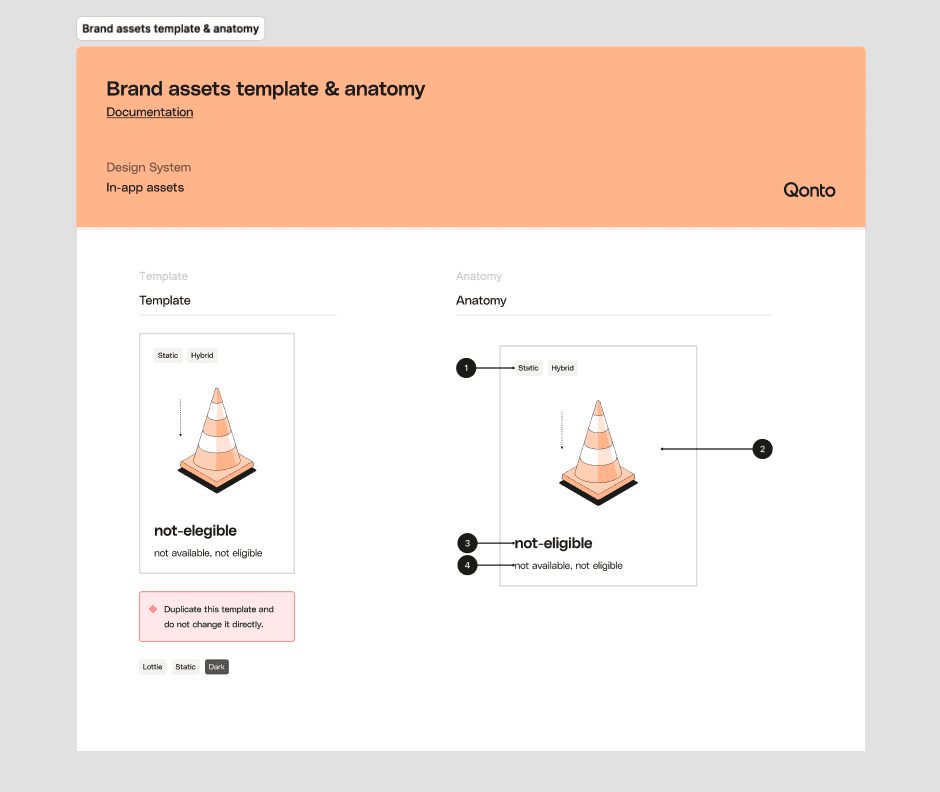
Standardised asset naming
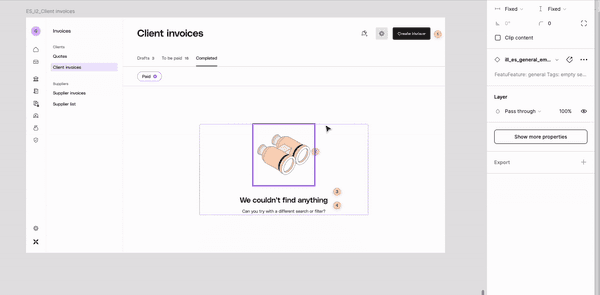
All assets created as components, allowing placeholders and component swaps
Success Analysis
During 2 months after issuing the new standard we haven’t seen any issues logged related this topic
Product Designers became autonomous in managing assets across teams
Brand Designers’ capacity improved thanks to eliminating “where can I find this asset?” questions
We gained insights on each others work which drastically improved our collaboration
More Projects
UI / UX Design
In-app assets library
Curated library with ready-to-swap components of all in-app assets we used across organisation and improved collaboration between Product and Brand Design teams
Year :
2025
Industry :
FinTech
Client :
Qonto
Project Duration :
4 weeks
Problem :
At Qonto’s in-house design studio, we created custom illustrations weekly - but delivery, storage, and maintenance needed work. I spotted these gaps during my Empty States project, pulling scattered assets from across the app.
I teamed up with another product designer and the brand team to overhaul our collaboration workflow.
We discovered a few issues:
Assets in existing library were nowhere near to match the size I needed them in as those were ‘raw’ materials
Illustrations in existing spec files had different sizes, even though they were supposed to be standardised
Some illustrations were saved in local team’s libraries, but formatted in a way that it wasn’t scalable
Our intake forms were no longer sufficient, requests were scattered and inconsistent, slowing down delivery times
Solution :
This project introduces a 3D abstract artwork centered on a coral-colored spiral form with smooth, flowing curves. Set against a soft pink gradient background, the design leverages organic geometry to create a sense of movement and depth.
The use of coral tones brings warmth and vibrancy, while the gentle gradient enhances the overall softness and modern appeal. This composition aims to capture attention while remaining elegant and balanced.
Process :
Gather an impactful (and impacted) team
We put together an operational team of 2 brand designers that were mostly working on in-app assets and 2 product designers that experienced similar issues the most
Worked with two main stakeholders, leads of both teams
Analyse the current situation
Poor discoverability of existing assets
Inconsistent asset sizes
Inconsistent stroke formatting due to manual resizing
Lack of standard on where and how to save illustrations
Unclear ownership in terms of who creates components
Using placeholders for asset swapping was not possible
Interview other Product Designers
We interviewed 5 other Product Designers from our team to understand how they deal with the process
All of them confirmed this is a problematic area for them, often requiring rework of assets and/or assistance from brand designers
All described the process as manual and time-consuming
That only meant we were on the right path.
Results :
Process definition
Mapped out the process based on requirements of both PD and BD
Introduced clear roles and responsibilities
Full inventory of assets
Gathered all assets existing in-app
Sliced them into types and categories
Rework of assets that were not fitting into any of categories to get rid of the ‘special cases’
(re)standardisation
Refined the asset sizes and types
Reworked the documentation of each type
Merged asset types in order to reduce the amount of types goal
Result :
One library to rule them all
All brand assets placed under one roof
Clear sections definitions
Standardised asset naming
All assets created as components, allowing placeholders and component swaps
Success Analysis
During 2 months after issuing the new standard we haven’t seen any issues logged related this topic
Product Designers became autonomous in managing assets across teams
Brand Designers’ capacity improved thanks to eliminating “where can I find this asset?” questions
We gained insights on each others work which drastically improved our collaboration
More Projects
UI / UX Design
In-app assets library
Curated library with ready-to-swap components of all in-app assets we used across organisation and improved collaboration between Product and Brand Design teams
Year :
2025
Industry :
FinTech
Client :
Qonto
Project Duration :
4 weeks
Problem :
At Qonto’s in-house design studio, we created custom illustrations weekly - but delivery, storage, and maintenance needed work. I spotted these gaps during my Empty States project, pulling scattered assets from across the app.
I teamed up with another product designer and the brand team to overhaul our collaboration workflow.
We discovered a few issues:
Assets in existing library were nowhere near to match the size I needed them in as those were ‘raw’ materials
Illustrations in existing spec files had different sizes, even though they were supposed to be standardised
Some illustrations were saved in local team’s libraries, but formatted in a way that it wasn’t scalable
Our intake forms were no longer sufficient, requests were scattered and inconsistent, slowing down delivery times
Solution :
This project introduces a 3D abstract artwork centered on a coral-colored spiral form with smooth, flowing curves. Set against a soft pink gradient background, the design leverages organic geometry to create a sense of movement and depth.
The use of coral tones brings warmth and vibrancy, while the gentle gradient enhances the overall softness and modern appeal. This composition aims to capture attention while remaining elegant and balanced.
Process :
Gather an impactful (and impacted) team
We put together an operational team of 2 brand designers that were mostly working on in-app assets and 2 product designers that experienced similar issues the most
Worked with two main stakeholders, leads of both teams
Analyse the current situation
Poor discoverability of existing assets
Inconsistent asset sizes
Inconsistent stroke formatting due to manual resizing
Lack of standard on where and how to save illustrations
Unclear ownership in terms of who creates components
Using placeholders for asset swapping was not possible
Interview other Product Designers
We interviewed 5 other Product Designers from our team to understand how they deal with the process
All of them confirmed this is a problematic area for them, often requiring rework of assets and/or assistance from brand designers
All described the process as manual and time-consuming
That only meant we were on the right path.
Results :
Process definition
Mapped out the process based on requirements of both PD and BD
Introduced clear roles and responsibilities
Full inventory of assets
Gathered all assets existing in-app
Sliced them into types and categories
Rework of assets that were not fitting into any of categories to get rid of the ‘special cases’
(re)standardisation
Refined the asset sizes and types
Reworked the documentation of each type
Merged asset types in order to reduce the amount of types goal
Result :
One library to rule them all
All brand assets placed under one roof
Clear sections definitions
Standardised asset naming
All assets created as components, allowing placeholders and component swaps
Success Analysis
During 2 months after issuing the new standard we haven’t seen any issues logged related this topic
Product Designers became autonomous in managing assets across teams
Brand Designers’ capacity improved thanks to eliminating “where can I find this asset?” questions
We gained insights on each others work which drastically improved our collaboration